
Deep Work: The Ultimate Strategy to Reclaim Your Focus
By groupstudytimer · Last updated 4 July 2026
We are living in an era of unprecedented digital distraction. In previous generations, the biggest distraction a student faced was staring out the window. Today, every student carries a supercomputer in their pocket connected to thousands of algorithms explicitly engineered to steal their attention. As a result, the average human attention span has plummeted. We struggle to read a single page of a textbook without feeling a compulsive urge to check our notifications. This constant context-switching is utterly destroying our ability to perform well academically.
However, there is a silver lining. Because the vast majority of students are chronically distracted, the ability to focus deeply has become a superpower. If you can train your brain to engage in "deep work"—a state of distraction-free concentration that pushes your cognitive capabilities to their absolute limit—you will easily outperform 95% of your peers. Deep work is the key to mastering complex subjects like organic chemistry, advanced calculus, and medical terminology in half the time.
To achieve this state, you cannot rely on sheer willpower. Willpower is a finite resource. Instead, you need a system. A dedicated online focus timer is the foundational tool for rebuilding your attention span. In this comprehensive guide, we will explore the neurobiology of concentration, how to systematically eliminate digital distractions, and how to use a focus timer to rewire your brain for academic excellence.
The Neurobiology of Distraction
To understand why a focus timer is so crucial, you must understand what happens in your brain when you get distracted. When you sit down to study a difficult subject, your brain requires a massive amount of glucose and oxygen. It is hard work. Your brain naturally wants to conserve energy, so it seeks out an easier task that provides a quick hit of dopamine—like checking a text message or refreshing a social media feed.
When you give in to that urge, you experience what psychologists call "attention residue." If you look away from your physics textbook to read a text message for just five seconds, and then look back at the textbook, your attention does not immediately return to physics. A significant portion of your cognitive processing remains stuck on the text message. It can take up to 20 minutes to fully regain the depth of concentration you had before the interruption.
If you are checking your phone every 15 minutes while studying, you are perpetually operating in a state of shallow work. You are never actually reaching the cognitive depth required to understand complex concepts. A focus timer solves this by creating a sacred, unbreakable block of time where interruptions are strictly forbidden. It acts as a digital shield for your attention.
Expert Insight on "Neuroplasticity"
Neuroplasticity is the brain's ability to reorganize itself by forming new neural connections. When you consistently practice deep work using a focus timer, you are actively thickening the myelin sheaths around the neurons responsible for concentration. In simple terms: focus is a muscle, and a timer is the dumbbell you use to train it.
The Transformative Benefits of a Focus Timer
Committing to a daily deep work routine using an online timer will fundamentally alter your academic trajectory. Here are the most significant benefits.
1. Accelerated Skill Acquisition
The formula for learning is: High-Quality Work Produced = (Time Spent) x (Intensity of Focus). Most students try to maximize the "Time Spent" variable by pulling all-nighters. Elite students maximize the "Intensity of Focus" variable. Three hours of absolute, uninterrupted concentration will yield more academic progress than eight hours of distracted, half-hearted studying. A focus timer enforces that intensity.
2. Overcoming the "Friction of Initiation"
The hardest part of any study session is simply starting. Your brain anticipates the pain of hard work and paralyzes you. A focus timer lowers this barrier. By telling yourself, "I am only going to turn on this focus timer for 15 minutes, and if I still hate it, I will stop," you trick your brain into starting. 99% of the time, once that 15-minute timer is running, momentum takes over and you continue working for hours.
3. Data-Driven Self-Awareness
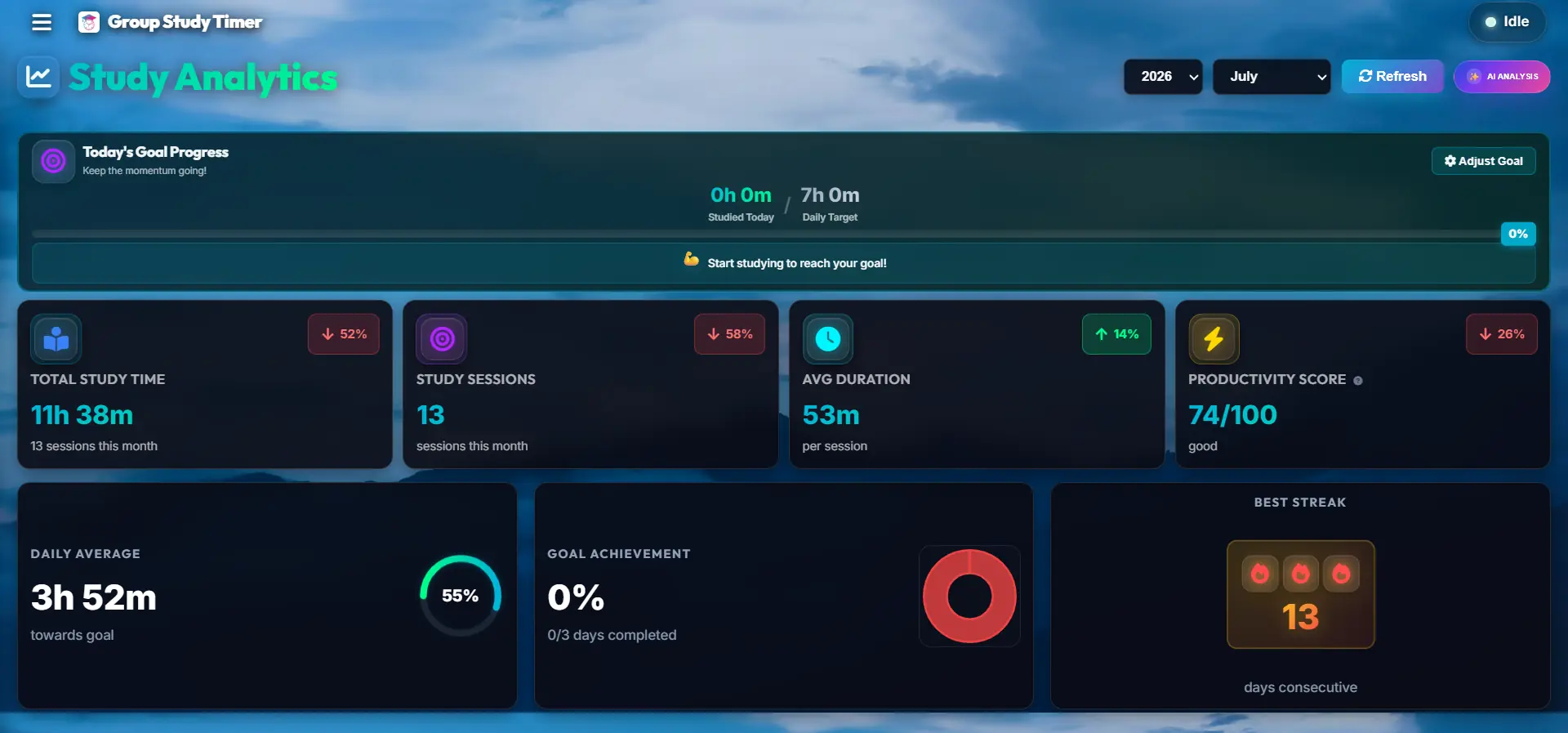
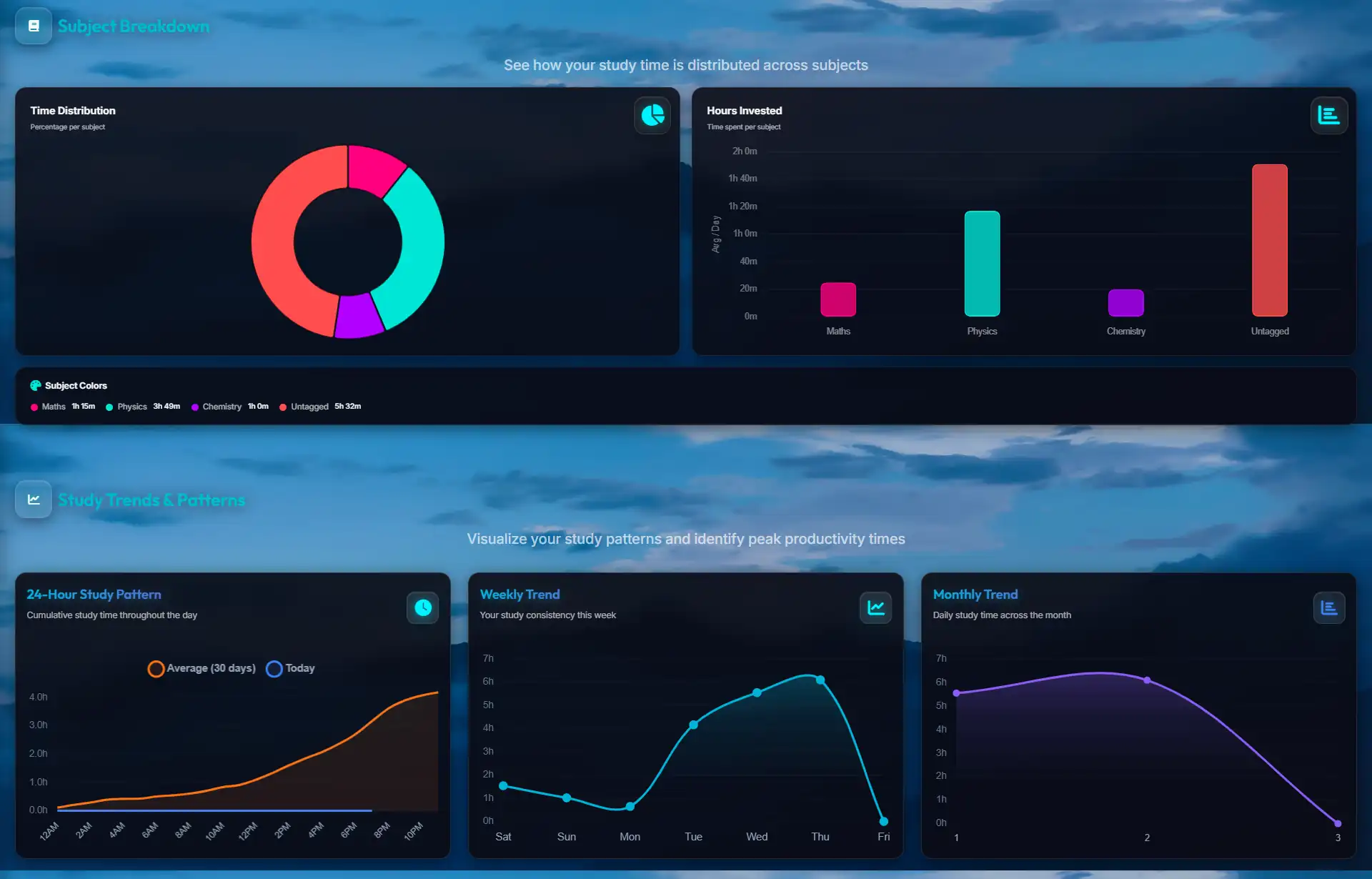
When you track every minute of your deep work, you stop lying to yourself about your productivity. The timer provides an objective dashboard of your effort. This data allows you to identify which subjects you are avoiding and which times of day you are most productive.
How to Execute a flawless Deep Work Session
You cannot simply sit at a messy desk, open a timer, and expect a miracle. Deep work requires strict preparation. Follow this exact methodology.
- Step 1: The Digital Quarantine. Before starting the timer, you must eliminate all potential interruptions. Put your phone in another room. Close every browser tab that is not directly related to your study goal. Turn off all desktop notifications. The environment must be sterile.
- Step 2: Set a Singular Objective. Multitasking is the enemy of deep work. You cannot study History and Physics at the same time. Define one specific, measurable goal (e.g., "Complete 20 practice questions on electromagnetism"). Select this subject in your tracker.
- Step 3: Start the Clock and Embrace the Boredom. When the timer starts, you will likely feel a strong urge to check your phone within the first ten minutes. You must resist this urge. Sit with the discomfort. This period of resistance is exactly when your brain is transitioning into the flow state.
3 Mistakes That Destroy Deep Work
Even if you use a timer, you can easily sabotage your session if you fall into these common psychological traps.
Mistake 1: Listening to Lyrical Music
Many students believe that listening to their favorite pop or rap songs helps them focus. This is scientifically false. The language-processing centers of your brain are forced to process the lyrics, which drains working memory away from the textbook you are trying to read. If you must listen to music, stick to instrumental lofi, classical, or ambient noise.
Mistake 2: The "Just One Quick Check" Fallacy
You are 30 minutes into a deep work block, and you think, "I'll just quickly check my email." That 10-second check completely shatters your concentration and introduces "attention residue" that will ruin the next 20 minutes of your session. When the timer is running, the outside world does not exist.
Mistake 3: Studying on Your Bed
Your brain associates your bed with sleep and relaxation. If you try to perform deep cognitive work while sitting in bed, your brain will constantly fight you, triggering feelings of fatigue. You must create a physical separation. Sleep in your bed, and execute deep work exclusively at a desk.
Comparing Focus Environments
To execute deep work properly, you need the right digital environment. Let's compare the most common tools.
Frequently Asked Questions (FAQ)
How long should my focus block be?
If you are just beginning to rebuild your attention span, start with 25-minute blocks. As your brain adapts to deep work, slowly increase the duration to 50 minutes, and eventually 90 minutes. Never exceed 90 minutes without taking a break, as this aligns with the body's natural ultradian rhythms.
Is this focus timer truly free?
Yes. We believe that every student deserves access to premium productivity tools. All features, including the timer, analytics, and group study rooms, are completely free with zero ads.
Can I use this timer to study with my friends?
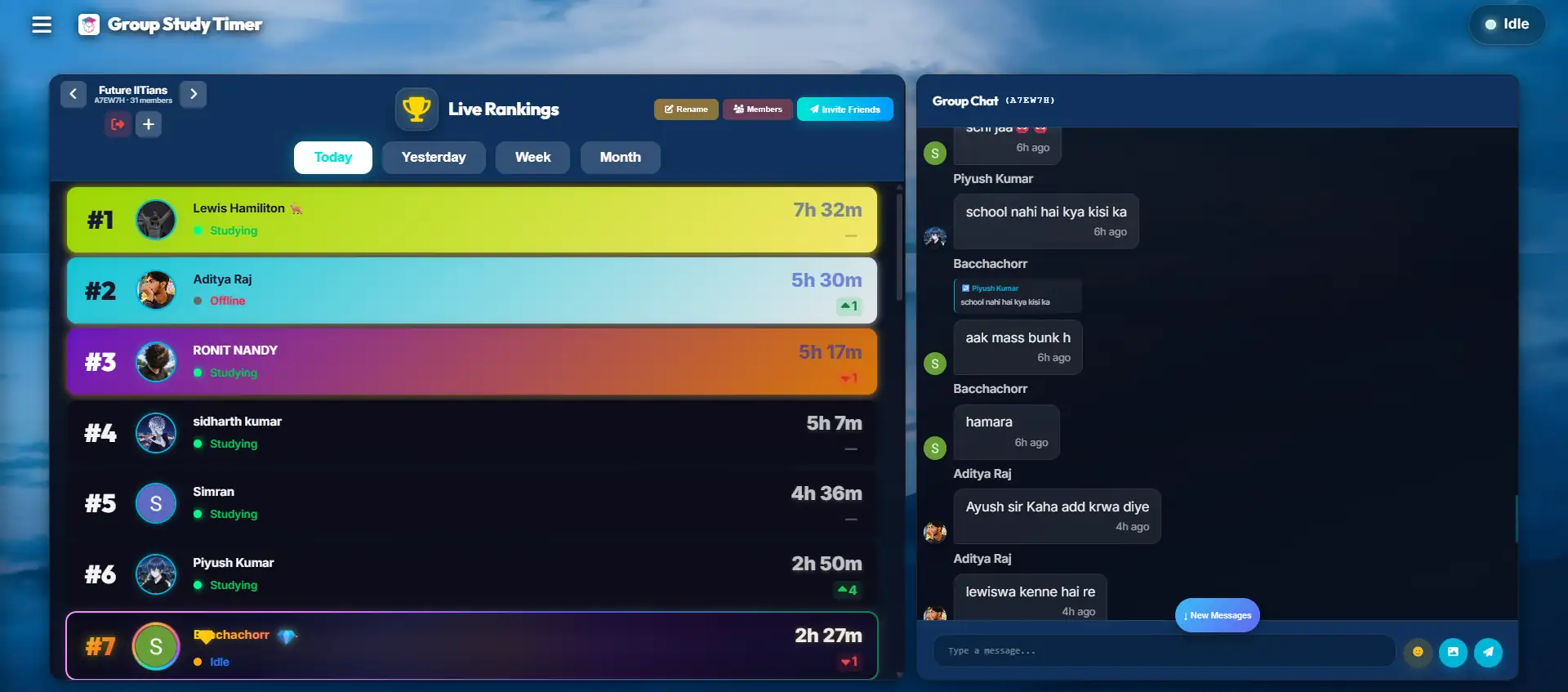
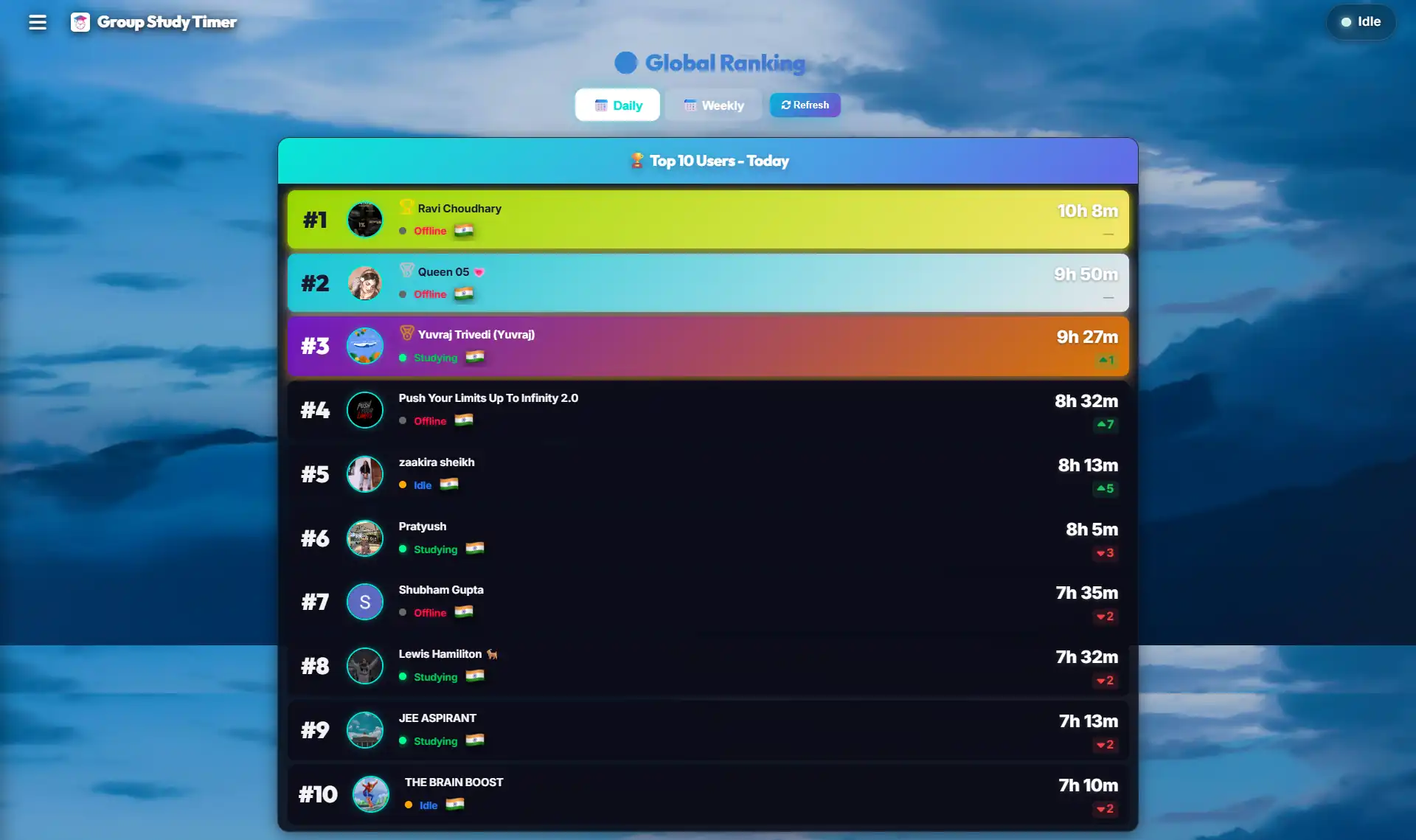
Absolutely. The platform features synchronized virtual study rooms. You can invite your friends, lock in your goals, and hold each other accountable through live, competitive leaderboards.
What if I have to use my computer to study? Won't I get distracted?
This is a common challenge. If you must use your laptop to watch lectures or read PDFs, we highly recommend using a website blocker extension to block social media during your timer sessions. Maximize your focus timer in one window, and your lecture in the other.
How many hours of deep work should I aim for daily?
Most cognitive scientists agree that the human brain can only sustain roughly 4 hours of true, intense deep work per day. Do not aim for 12-hour days. Aim for 4 to 5 hours of perfectly tracked, unbroken concentration. It will yield better results than 10 hours of distracted reading.
Why We Built a Distraction-Free Ecosystem
During our own rigorous exam preparations, we noticed a frustrating irony: the very tools we used to track our studying were often full of distractions. Many timers were loaded with flashing advertisements or complex menus that disrupted our workflow.
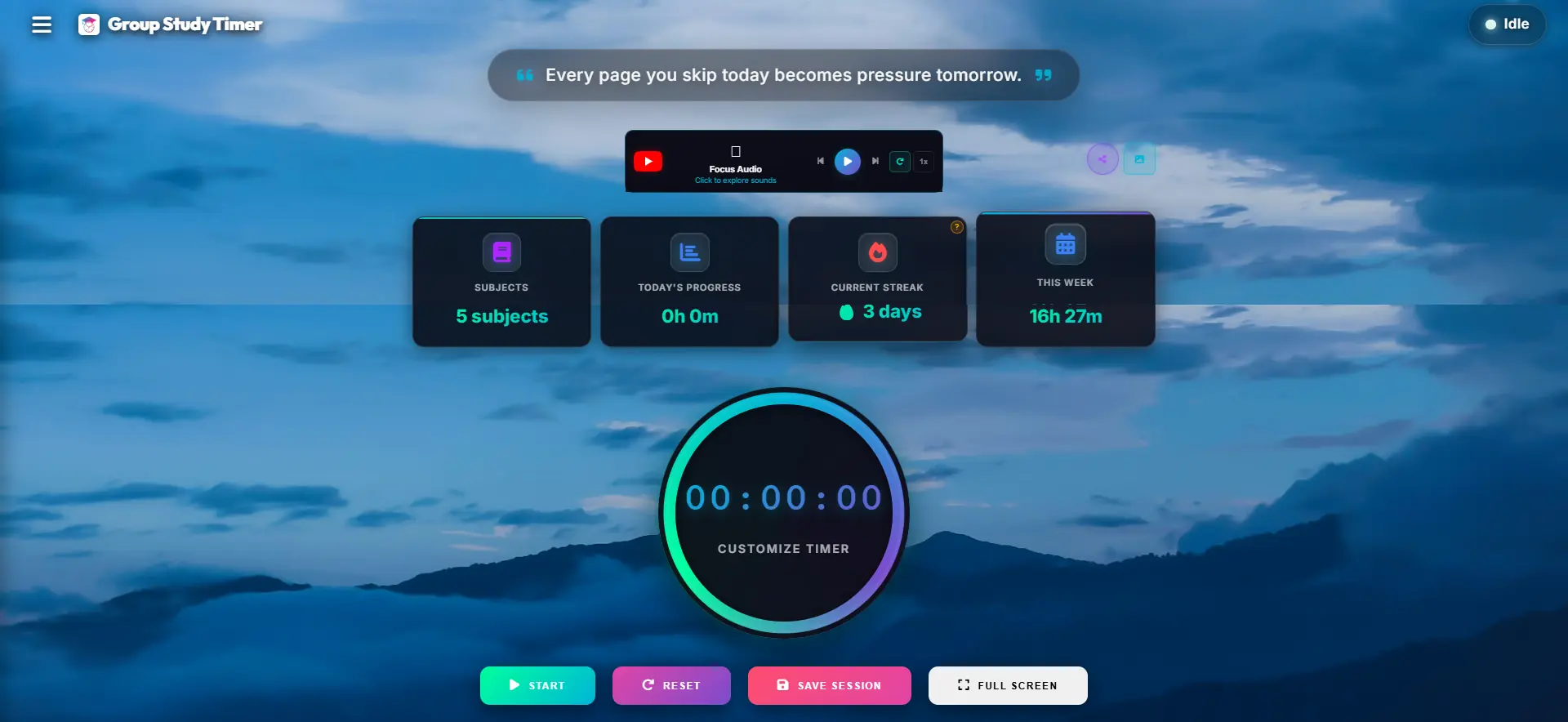
We built GroupStudyTimer specifically to solve this. We engineered a platform rooted in minimalism. When you open the dashboard, everything is designed to lower your cognitive load. The dark mode soothes your eyes, the analytics are automated, and the interface is incredibly clean. It provides the exact environment necessary to shut out the noise of the digital world and dive deeply into your academics.
Explore More Productivity Strategies
Ready to dive deeper into optimizing your study habits? Check out our specialized guides tailored for elite students:
- 👉 Conquering Burnout with the Pomodoro Technique - Learn how structured rest is the key to 8-hour study days.
- 👉 Surviving Exam Season: The Power of Virtual Study Rooms - Discover how peer accountability can cure academic isolation.
- 👉 Designing Your Focus: The Aesthetic Timer - Read the science behind visual clutter and why a beautiful UI reduces cognitive load.
Reclaim Your Attention Span.
Stop letting algorithms steal your focus. Step into a distraction-free environment and train your brain for deep work.
No credit card required. Instant access.