
Studying With Friends: Why It Works and How to Do It Right
By groupstudytimer · Last updated 4 July 2026
Long exam prep — JEE, NEET, UPSC, CAT, boards — gets lonely in a way people don't warn you about. There's a popular image of the lone topper who locks the door for a year and comes out with a rank. For a few people that works. For most, months of studying entirely alone just leads to drifting: skipped days, falling motivation, and the slow feeling that nobody else quite gets what you're going through.
The reason is simple. When you study alone, the only thing getting you to your desk is your own willpower, and willpower is not reliable. On a good day it's plenty. But on a Tuesday when you slept five hours and the next thing on the list is a chapter you hate, you'll start negotiating — "one day off won't matter" — and one day quietly becomes a wasted week. Almost everyone who's prepped for a big exam knows that spiral.
Studying with friends is the usual fix, but not in the sitting-around-a-table-chatting sense. What actually helps is shared accountability: knowing someone will notice whether you showed up. This guide covers why that works, how virtual study rooms make it practical even when your friends live in different cities, and how to run a session that stays focused instead of turning into a hangout.
Accountability Is More Reliable Than Motivation
Motivation is a feeling, and feelings come and go. You can't build months of preparation on something that changes with your mood and sleep. Accountability is more durable because it's external. If you plan a 6 AM session alone, hitting snooze costs you nothing in the moment — no one sees it, so your brain lets it slide.
Now put three friends in that same 6 AM slot in a shared room. Snoozing suddenly has a small social cost: they'll notice your name isn't there, and you'll watch their hours tick up on the leaderboard while yours sits still. That mild pressure is usually enough to get you up — not because you feel inspired, but because you'd rather not be the one who bailed.
We tend to match the people around us. If your evenings are spent with friends who game, you'll game. If the people you "sit with" every day are quietly logging four focused hours, your own baseline drifts up to meet theirs without you deciding to. The question stops being "can I do this today" and becomes "everyone's already started, I might as well too."
A quick note on "body doubling"
There's a name for working alongside someone else without really interacting: body doubling. It's often mentioned in the context of ADHD, where the plain presence of another focused person makes it easier to start a task you'd otherwise put off. You don't talk, you don't collaborate — you just work in parallel, and somehow that's enough to keep you anchored.
What You Actually Get From Studying Together
A few concrete things change when you move from studying alone to studying alongside people, even remotely.
The loneliness eases up
Prep can feel like you're carrying something nobody else understands. Studying with others quietly reminds you that everyone's stuck on the same chapters, rattled by the same mock scores, and just as tired by 9 PM. That shared struggle doesn't make the syllabus smaller, but it does make the months feel less isolating — which matters more than people admit during peak stress.
Consistency gets a little addictive
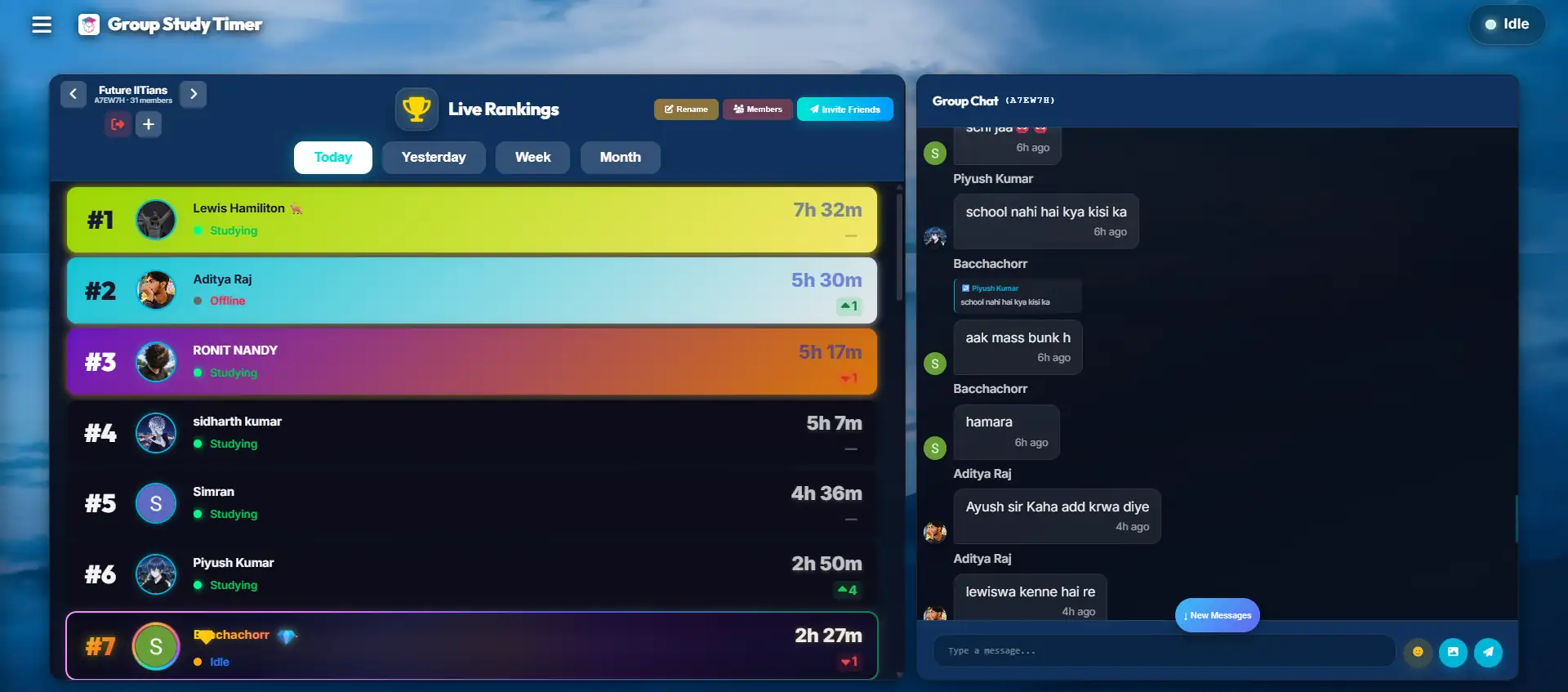
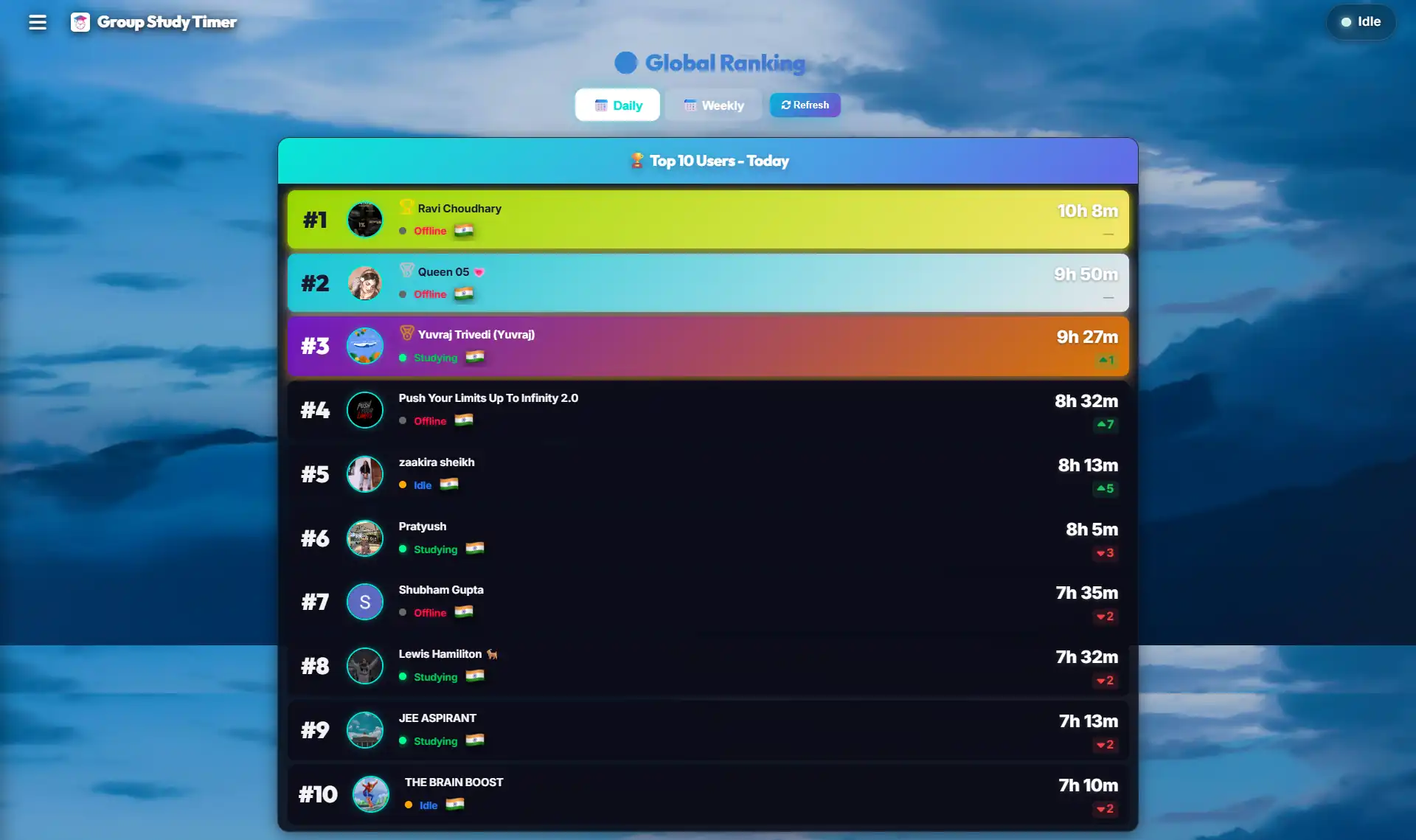
Logging hours in a private notebook is easy to ignore. Seeing yourself sitting at rank 4 in your friend group, one 50-minute block away from rank 2, is harder to ignore. It's a small competitive nudge, but on the days you'd otherwise stop early, it's often exactly the thing that gets one more chapter done.
Doubts don't stall your whole evening
Alone, one problem you can't crack can eat an hour and kill your momentum for the night. With friends in the room, you drop it in the chat during the break, and the person who's good at that topic clears it up in two minutes. You both get back to work instead of one of you spiralling in frustration.
How to Run a Session That Doesn't Fall Apart
Studying with friends can easily backfire — a "study call" that's really just a two-hour chat is worse than studying alone. The difference between the two is a couple of simple ground rules everyone agrees to before starting.
- 1. Cameras on, mics off during work. If you're using video, leave cameras on so everyone can see people are actually at their desks — that's the whole body-doubling effect. But mute all mics while the timer runs. One person "just quickly asking something" is enough to pull everyone out of focus.
- 2. Say what you're doing before you start. Have everyone type their goal for the block into the chat — "reading Bio pages 40-60", "20 integration problems". Saying it out loud to the group makes it a bit harder to quietly give up halfway.
- 3. Work on the same clock. Agree on one rhythm — 50 minutes of silence, then 10 minutes off works well for most. During the break, mics come on: complain about the syllabus, sort out a doubt, have a laugh. When the break ends, mics go back off and everyone restarts together. Being in sync is what makes the room feel like a group instead of a bunch of people on mute.
Where Group Study Goes Wrong
A good study room is easy to wreck. Watch for these three, because they're what usually turn an accountability group back into a group chat.
Letting it become a hangout
The slow killer is small talk creeping into the work blocks. One joke mid-session invites a reply, then a tangent, and the focus is gone. It helps to have one person whose job is simply to say "back to it" and mean it. Keep the chatting for the breaks — that's what they're for.
Padding your hours
When there's a leaderboard, someone eventually leaves the timer running through dinner to look busy. The moment that happens, the numbers stop meaning anything and the group loses trust in them. Idle-detection that pauses a session when nobody's really there is what keeps the ranking honest — otherwise the most committed person usually isn't the one on top.
Studying with the wrong people
Not every friend is a good study partner, and that's fine. Someone who's always late, skips half the sessions, or won't mute drains everyone else's momentum. A small group of people who genuinely want to put the hours in beats a big room where half the members are along for the vibes.
Comparing Your Study Environments
Where and how you study is just as important as what you study. Let's look at how virtual study rooms stack up against traditional environments.
Frequently Asked Questions (FAQ)
What happens if my friends and I are in different time zones?
Virtual study rooms are entirely location-independent. The synchronized timers and leaderboards operate globally. Whether your accountability partner is in Mumbai, New York, or London, you will see their hours update in absolute real-time.
How does the anti-cheat system protect the leaderboards?
If someone leaves the browser open overnight to fake a 12-hour session, the idle detection notices there's no real activity and pauses their clock. It's not perfect, but it's enough to keep a friend group's ranking honest so the person on top is usually the one who actually did the work.
Is there a limit to how many friends can join a room?
Currently, there are no hard limits on group sizes. However, from a psychological perspective, we find that small, intimate groups of 3 to 8 highly dedicated students are far more effective than massive public rooms of 50 strangers.
Do we all have to study the same subject?
Not at all! The beauty of body doubling is that the specific task doesn't matter. You could be solving organic chemistry equations while your friend writes an essay. The shared accountability stems from the act of focusing, not the specific subject material.
Is the group study feature free to use?
Yes. The group rooms, real-time tracking, and leaderboards are all free — there's no separate "multiplayer" tier you have to pay for. You can create a room and invite friends without anyone signing up for anything paid.
Why We Built the Group Rooms
During our own exam years we kept improvising versions of this. WhatsApp groups turned into notification spam. Shared spreadsheets of hours felt like homework about homework. A Discord call was better, but it needed one person constantly policing it to stop the whole thing sliding into a chat. What we actually wanted was the quiet accountability of studying in a library with friends, minus the commute and minus the babysitting.
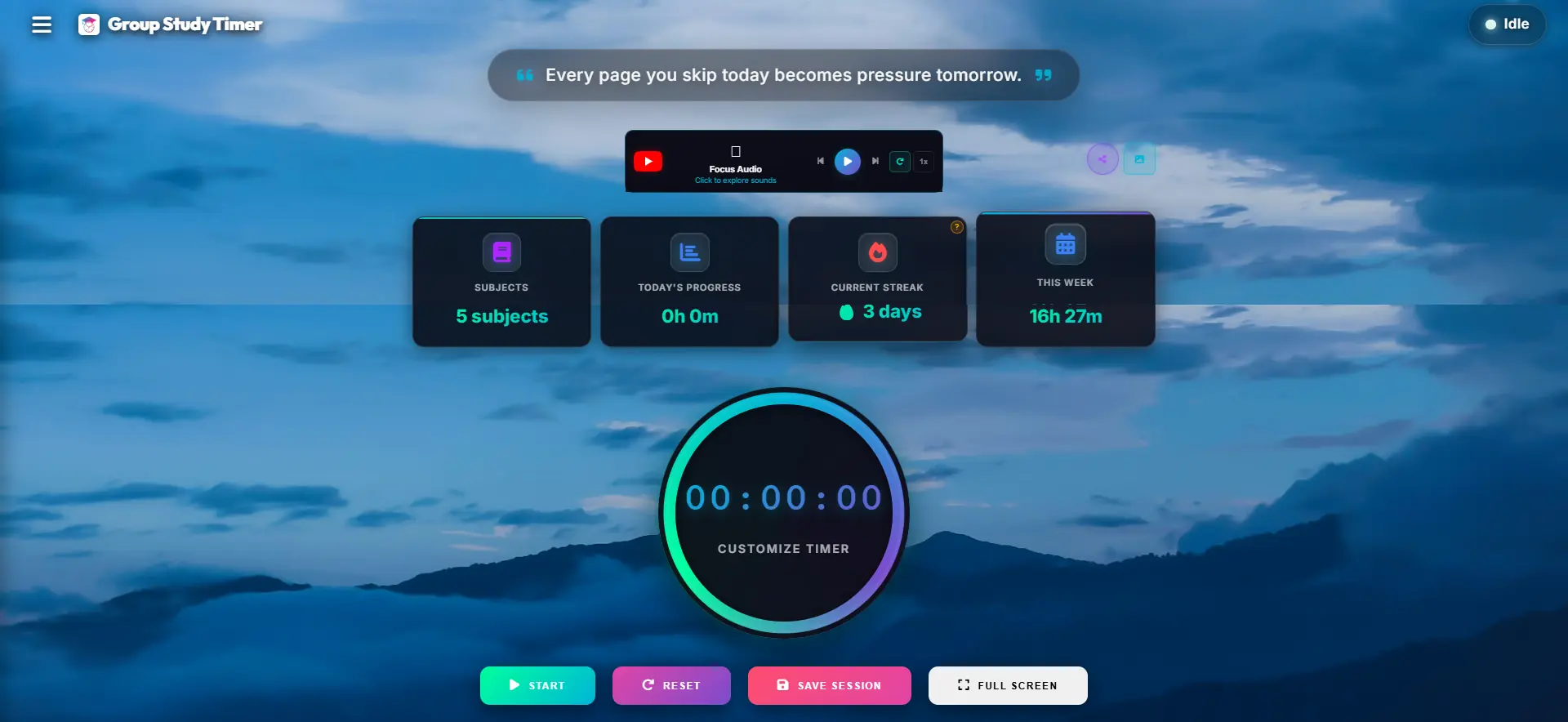
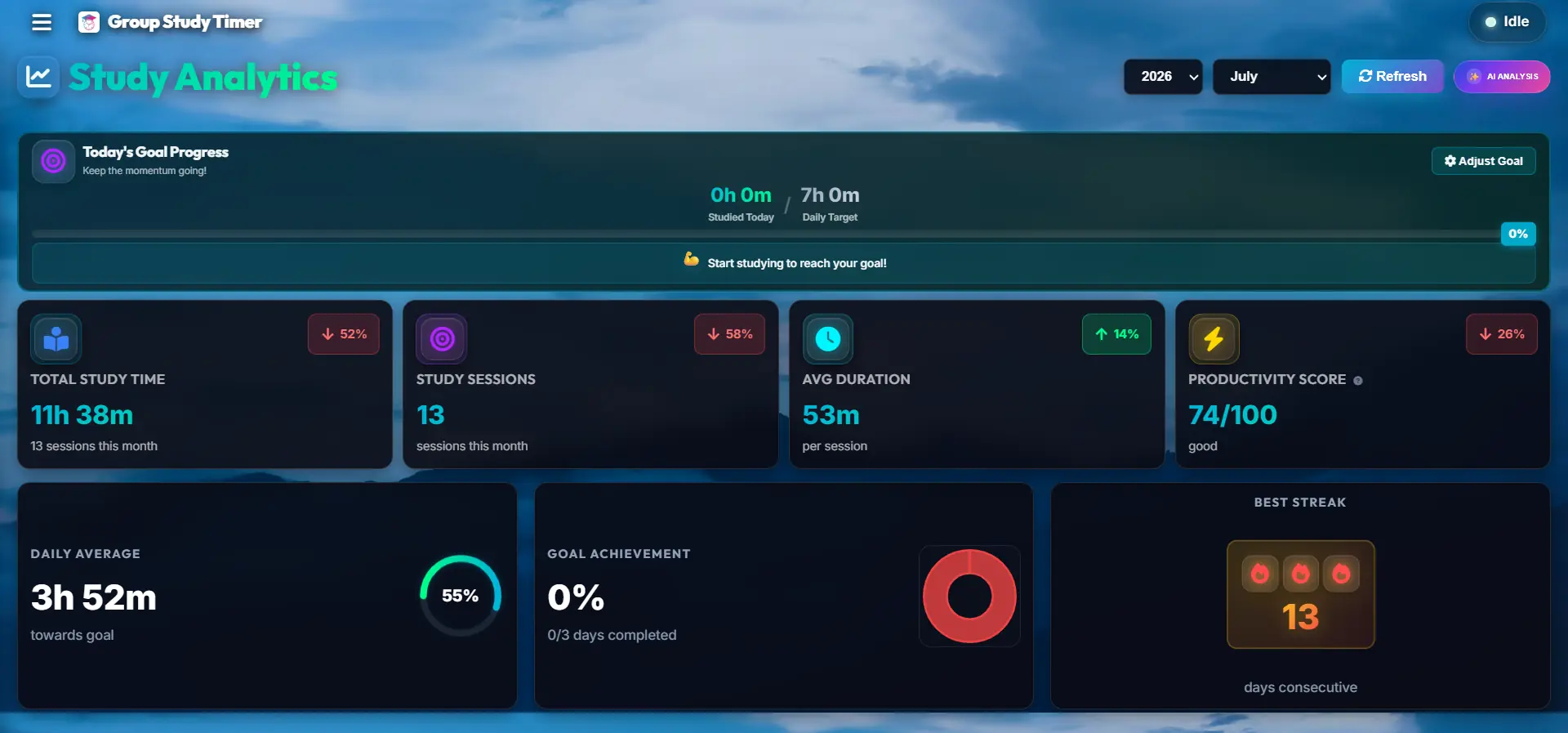
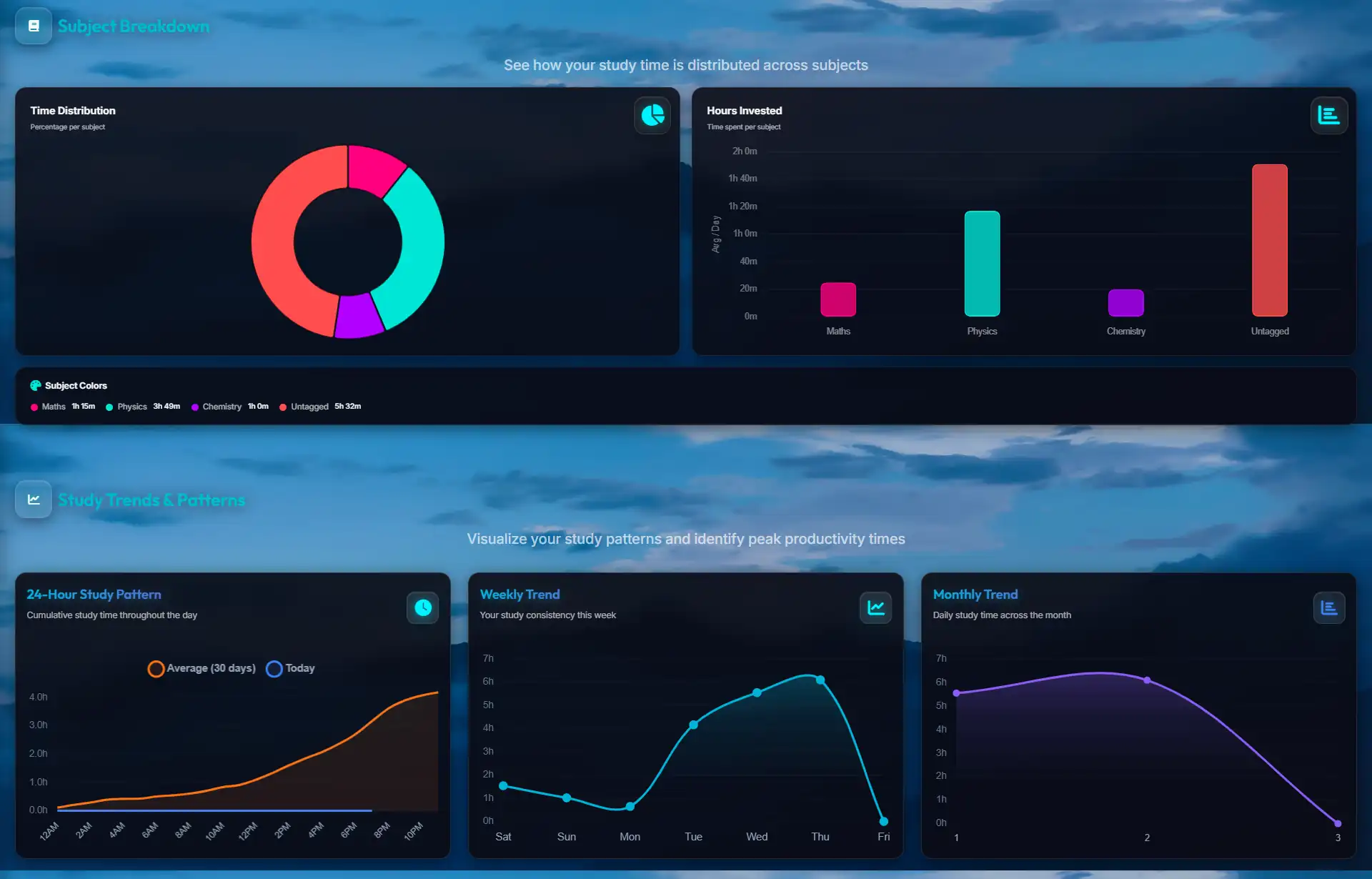
So the group rooms are built to do that with as little effort as possible: it runs in the browser, syncs everyone's hours automatically, builds the heatmaps for you, and pauses fake sessions so the leaderboard stays trustworthy. It won't make anyone study who doesn't want to — but if you've got a few friends who are serious, it takes the friction out of keeping each other honest.
Further Reading for Elite Students
If you are serious about upgrading your academic performance, explore our other deep-dive guides into productivity psychology:
- 👉 Mastering Your Time: The Ultimate Study Timer Hack - Learn why Parkinson's Law dictates that you must use a ticking clock to enforce urgency.
- 👉 Conquering Burnout with the Pomodoro Timer - Discover why forcing yourself to take a break every 25 minutes actually doubles your total endurance.
- 👉 Designing Your Focus: The Aesthetic Timer - Read the cognitive science behind visual clutter and how a minimalist UI accelerates flow state.
Don't Study Alone This Time
Pull in two or three friends who are serious, agree on a time, and start showing up for each other. It's free, runs in the browser, and over 1,000 students are already using it.
No credit card required. Instant access.